Why managing startup helps
- Fewer conflicts: updaters/hooks can load incompatible DLLs early in boot.
- Faster startup: less to launch means quicker sign-in and fewer apps contending for disk/CPU.
- Cleaner diagnostics: with fewer moving parts, it’s easier to pinpoint which app triggers an error.
Caution
Don’t disable your antivirus, input/touchpad drivers, or critical OEM tools. If unsure, toggle one item at a time and test.
Open Startup Apps
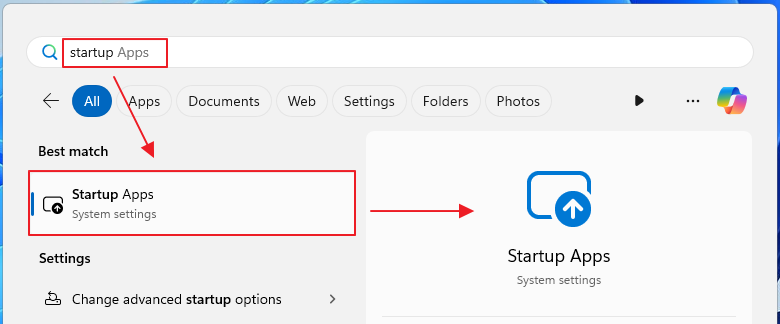
- Open Start → type Startup Apps and open it (Settings → Apps → Startup on recent Windows versions).
Disable non-essential items
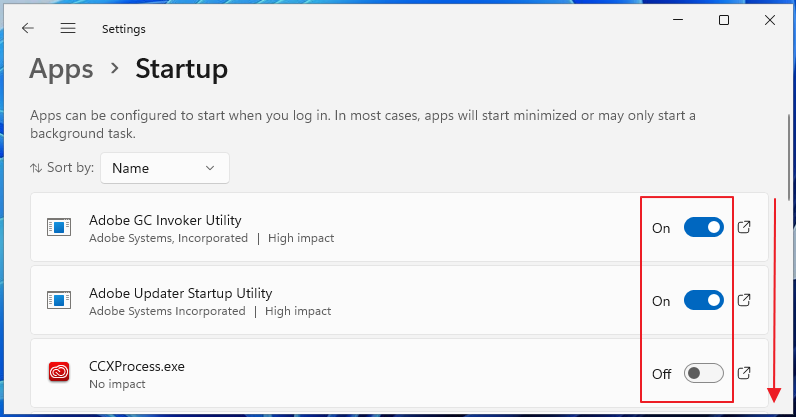
Flip the switch to Off for apps you don’t need at sign-in. Prioritize items with High impact or apps you rarely use.
- Keep security software, cloud sign-in agents you rely on, and input drivers enabled.
- Disable toolbars, updaters, and launchers you don’t use daily—these are common DLL conflict sources.
Isolate the culprit
- Disable most non-essential items → Restart → check if the DLL error disappears.
- Re-enable items in small batches (or one by one), restarting each time, until the error returns.
- When you find the offender, uninstall or update it via Programs & Features.
Task Manager (alternative)
- Press Ctrl+Shift+Esc → Task Manager → Startup apps (or Startup).
- Select an entry → click Disable. Use the Startup impact column as a guide.